Fresh-market blueberries require selective, gentle picking, which is labor-intensive and expensive. Over-the-row machine harvesters are fast but non-selective, bruising mixed-ripeness fruit and limiting yield to the processing market. Selective robotic harvesters typically target individual fruits rather than fruit clusters, which limits harvesting efficiency for small, densely clustered blueberries.
This paper presents CLASP, a Cluster-Level Autonomous Selective Picking robot with a Soft Active Rolling-Band Gripper (SARB-Gripper). Two compliant bands envelop the cluster and roll against the fruit, drawing mature berries off in sequence, while closed-loop regulation of the pulling force keeps the applied load below the immature detachment threshold. A global-to-local perception pipeline pairs an eye-to-hand camera for global cluster detection and target selection with an eye-in-hand camera for local localization and cluster orientation estimation.
Field measurements confirm a clear detachment-force separation between mature and immature fruit, and the SARB-Gripper reproduces a commanded pulling force to within 3.7 %, enabling selective harvesting at the cluster level. In end-to-end field trials, CLASP autonomously grasped 23 of 25 presented clusters (92 %). With a component cost of approximately $3,326 per unit, CLASP offers a scalable approach to selective cluster-level harvesting for fresh-market blueberries.
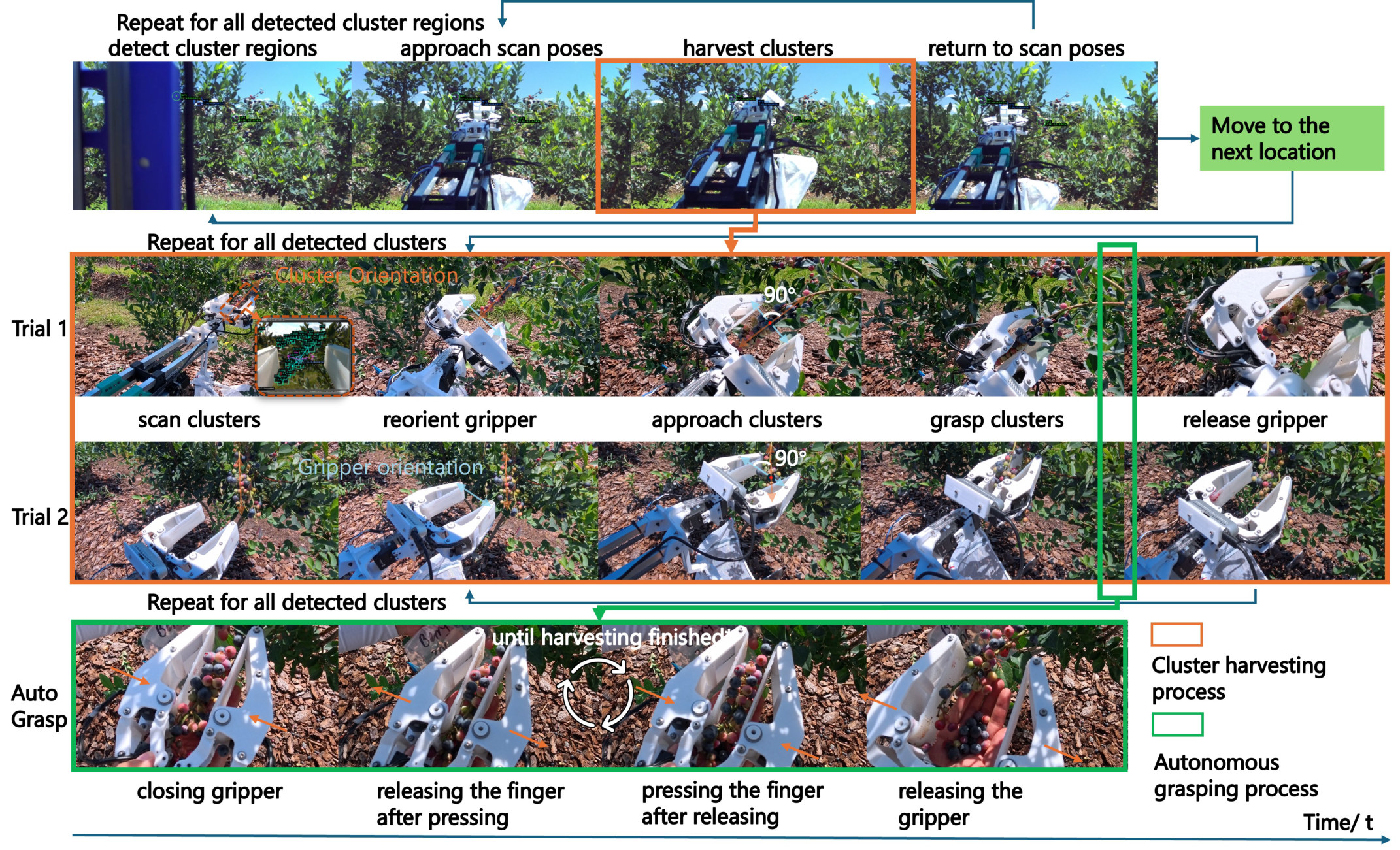
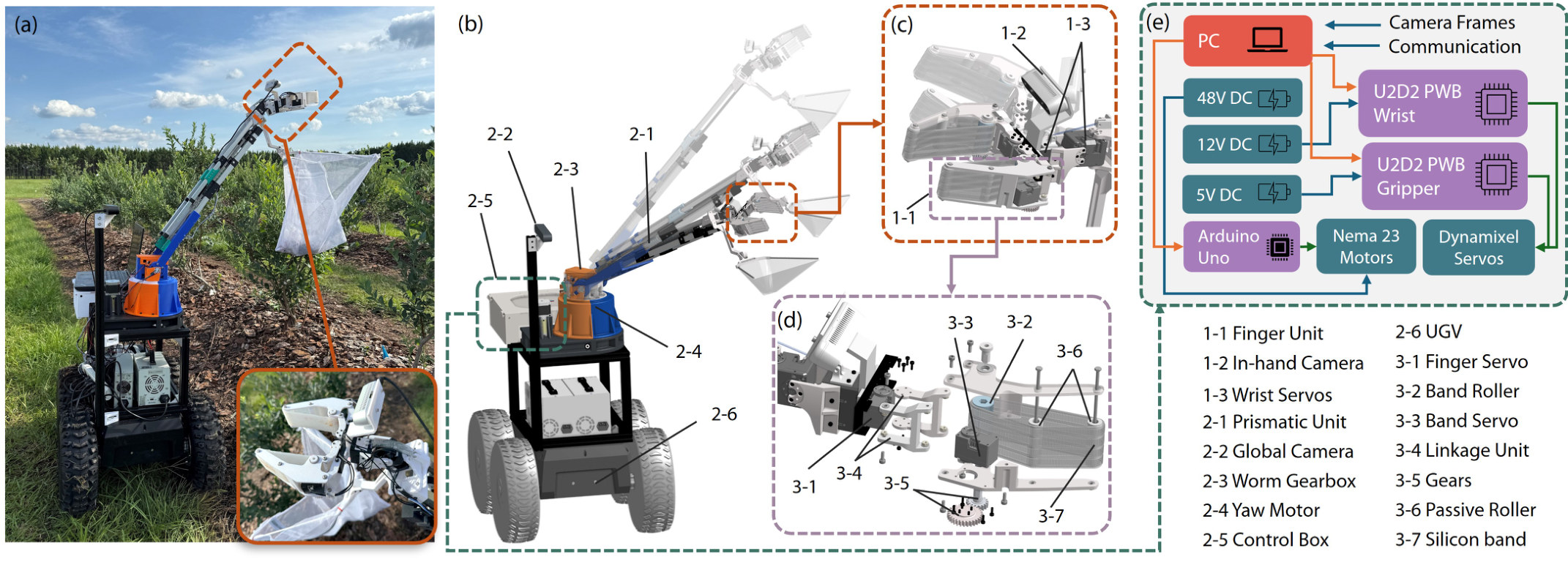
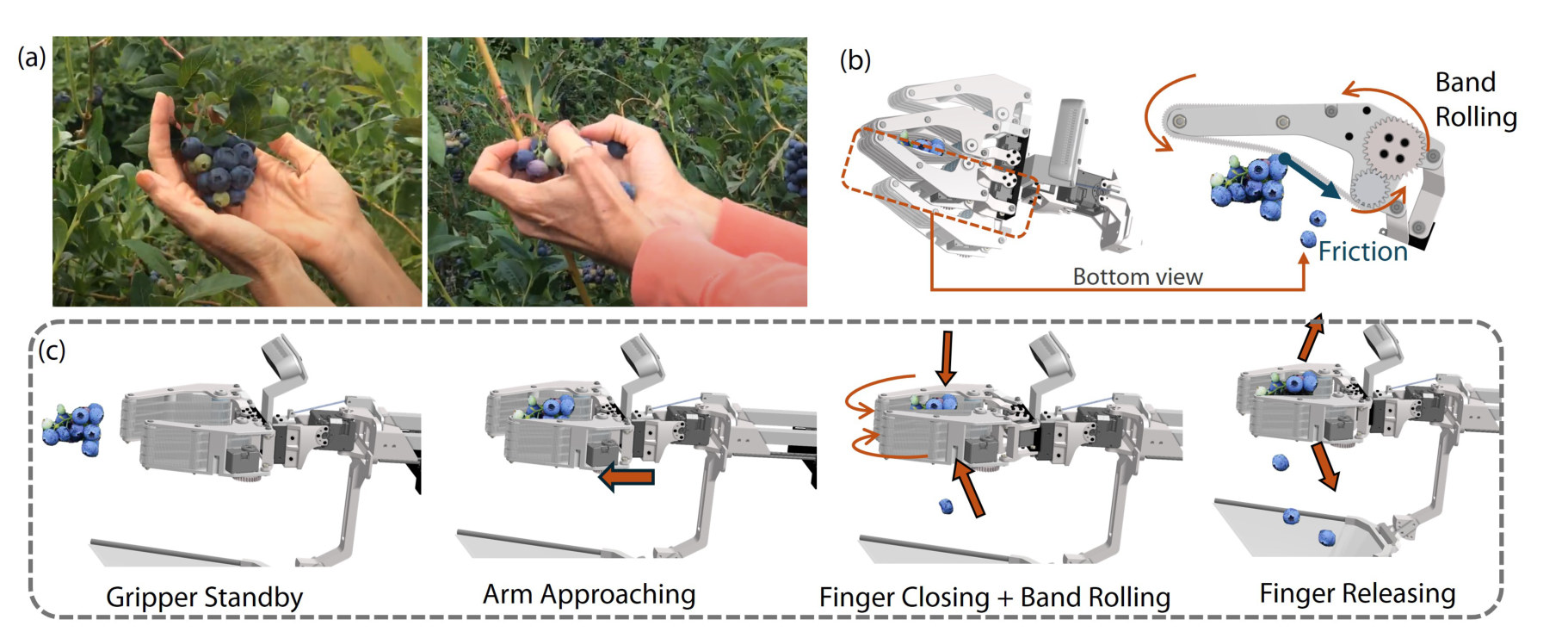
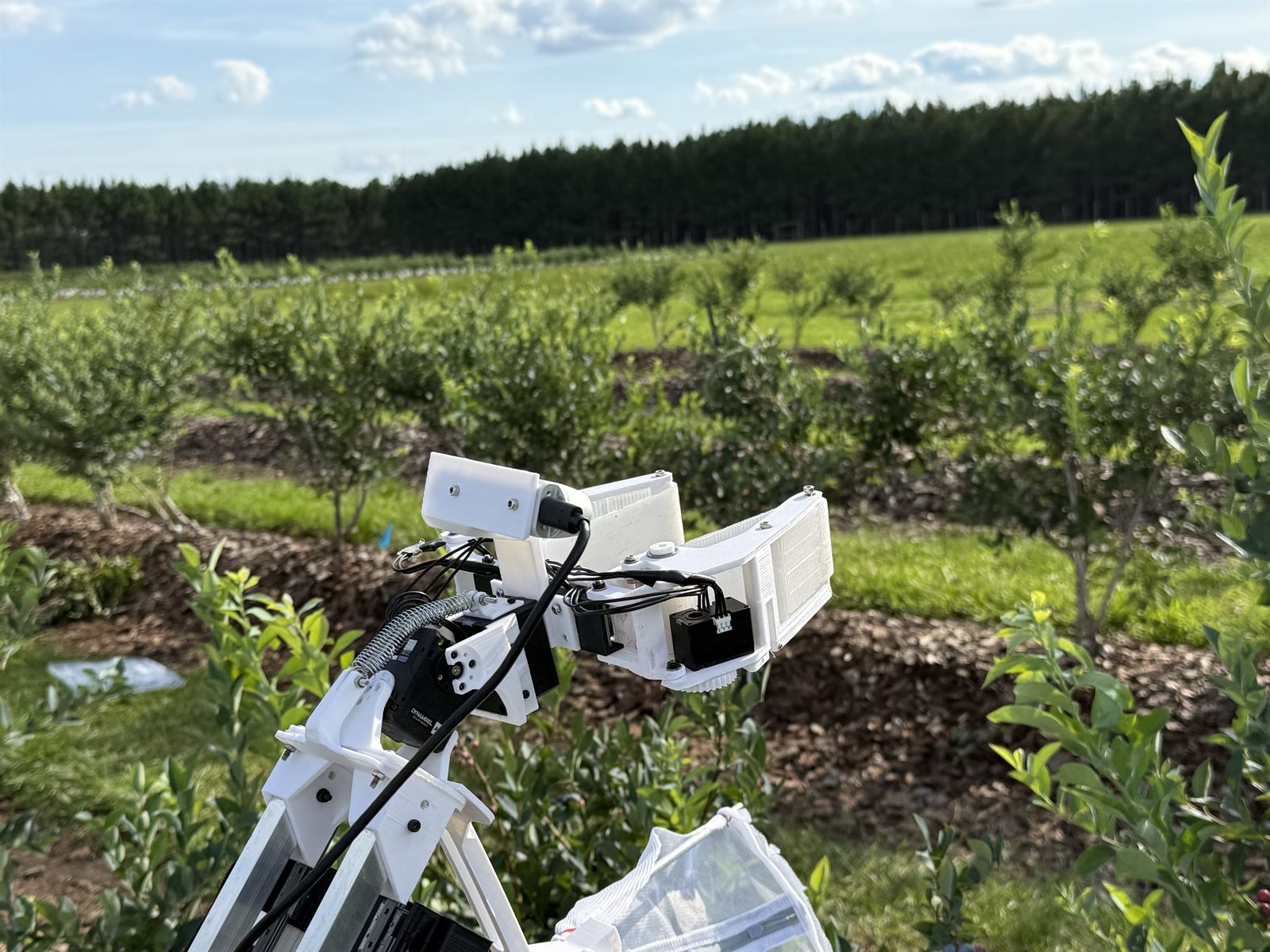
Human pickers rub several berries at once against the supporting stem with their thumb and catch the fruit in their palm: ripe berries let go under the load, unripe berries stay attached. The SARB-Gripper reproduces this motion with two fingers, each carrying a soft Dragon Skin 20 silicone band driven by its own Dynamixel XC330 servo. The fingers close around a cluster through four-bar linkages, the bands roll, and friction at the fruit–band interface detaches berries at the berry–pedicel junction into a soft net below the gripper.
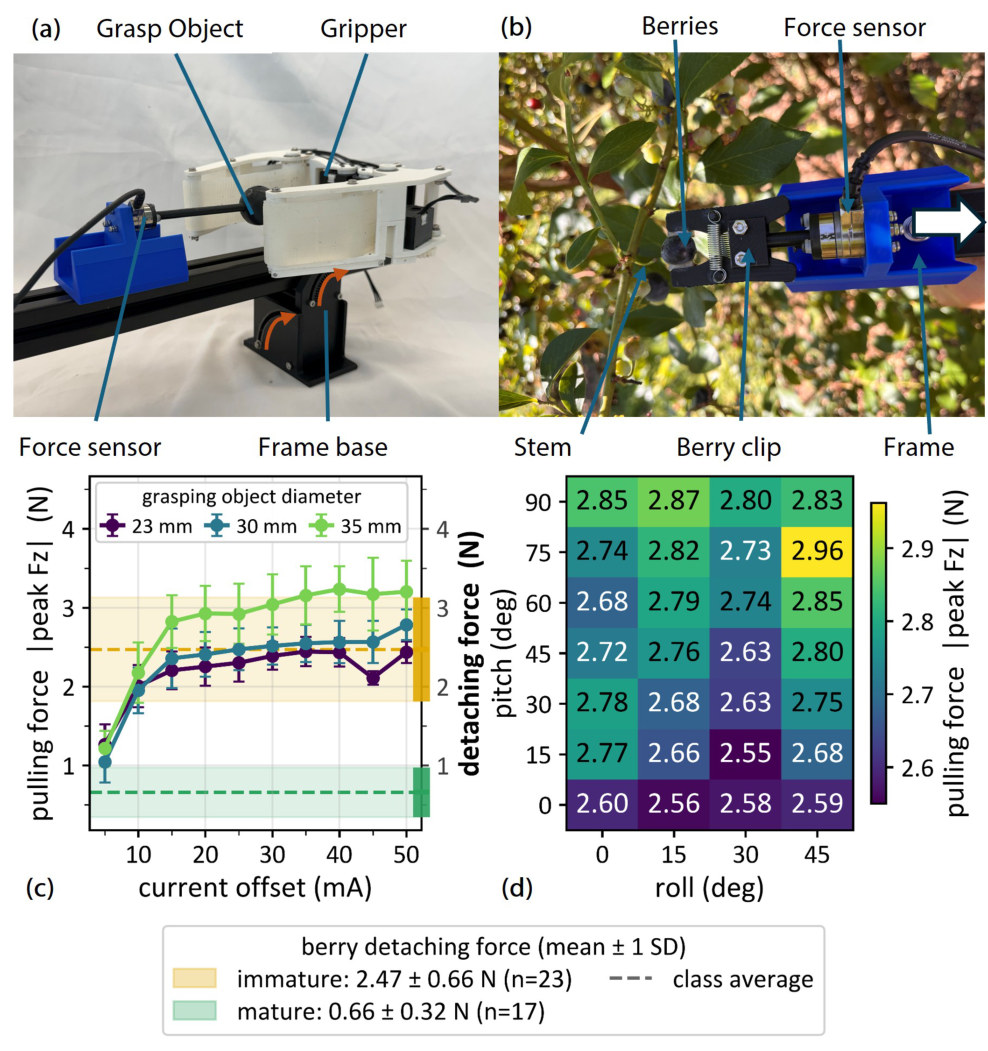
Sensorless force regulation. Because the finger servos run in current-based position control, motor current rises when a cluster resists closure and serves as a surrogate for contact force. Each finger closes while its window-averaged current sits below an adaptive threshold and backs off slightly when it exceeds it, so the gripper conforms to irregular, off-centre clusters and bounds the load while the bands keep rolling. Harvesting stops when the finger currents return to their unloaded baseline or when the eye-in-hand detector no longer sees mature berries.
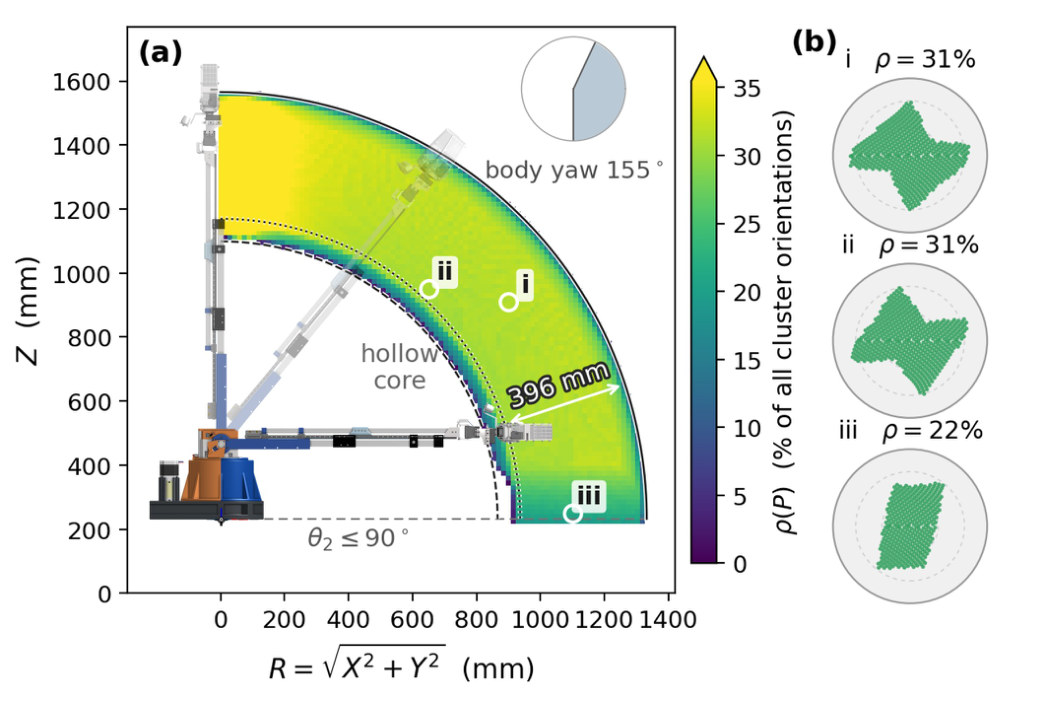
Only 40 % of surveyed clusters were visible from a fixed global viewpoint. CLASP therefore localizes coarsely with a ZED 2 stereo camera, moves the arm to a kinematically feasible scan pose, and refines with the in-hand RealSense: YOLO26n detections are projected through depth into a cluster point cloud, and the cluster axis is recovered as its leading principal component. Wrist roll then aligns the gripper's transverse axis with the cluster so both bands contact it symmetrically. A full-chain numerical IK, seeded by the closed-form shoulder solution, favours a straight prismatic insertion along the approach direction to limit lateral sweeps through the canopy.
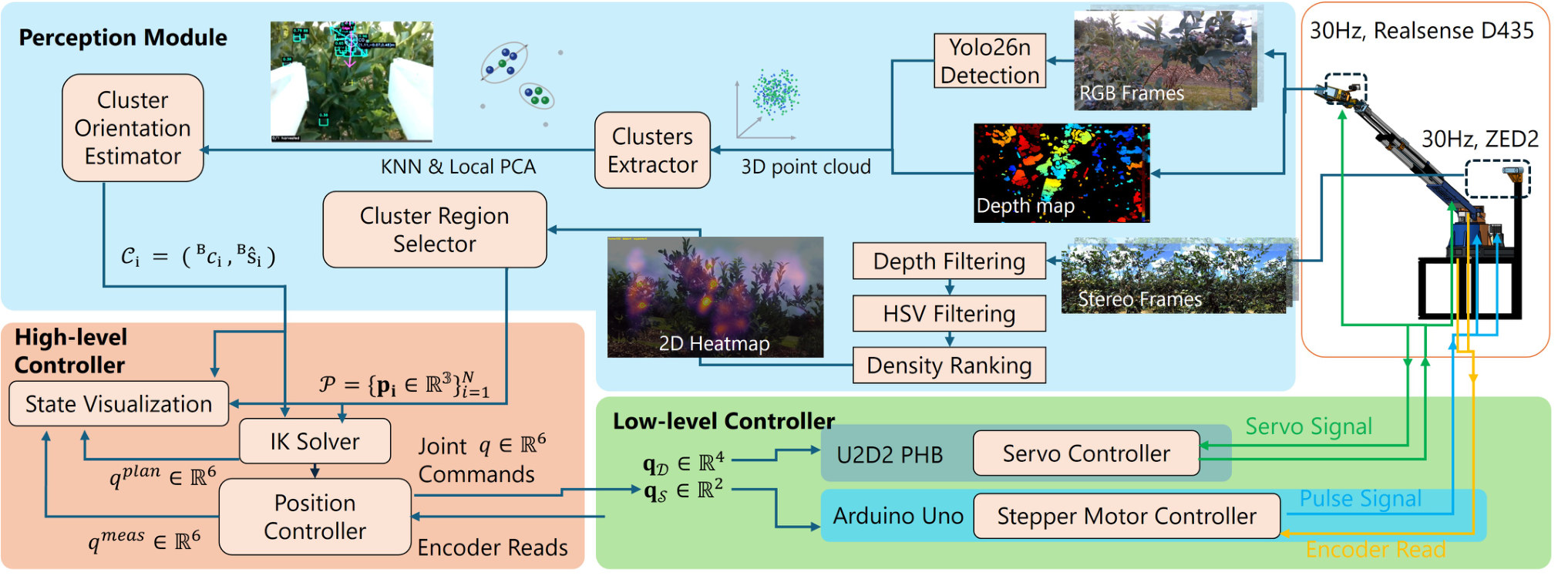
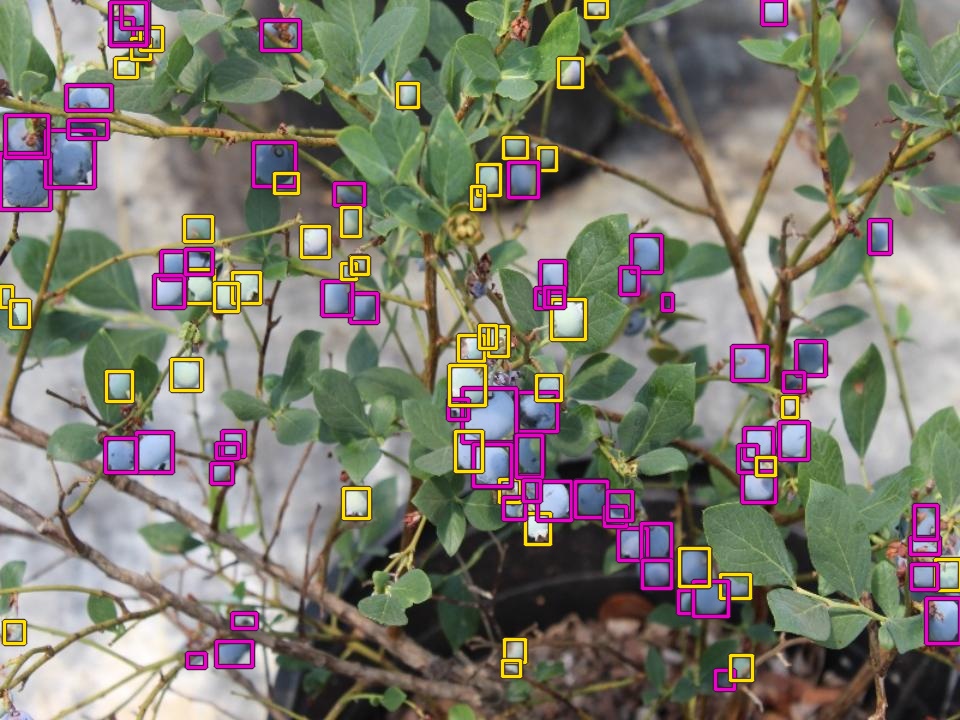
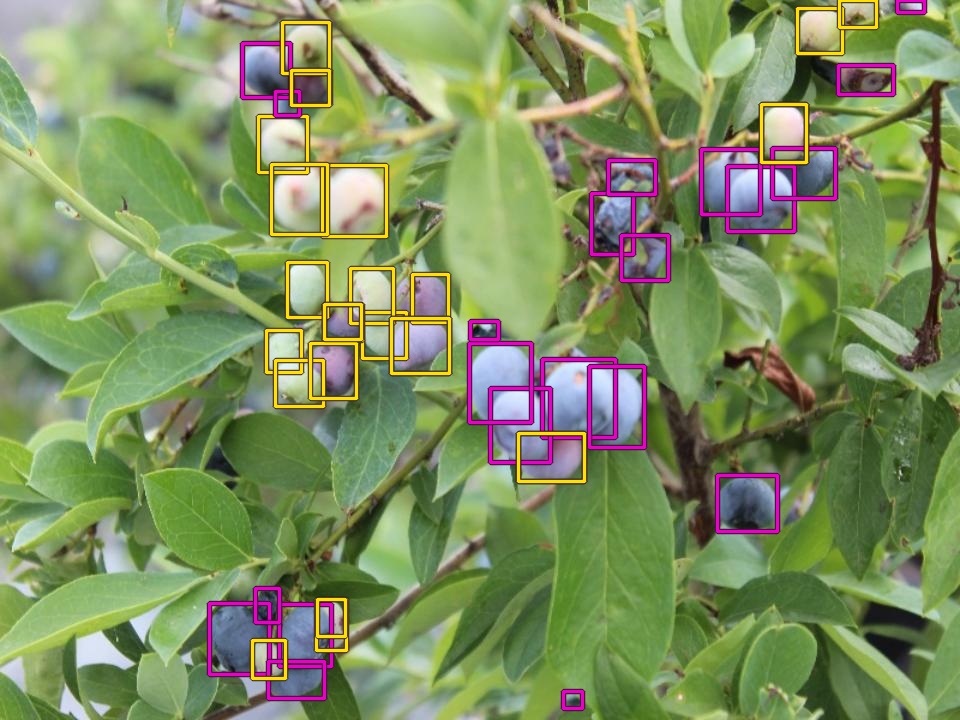
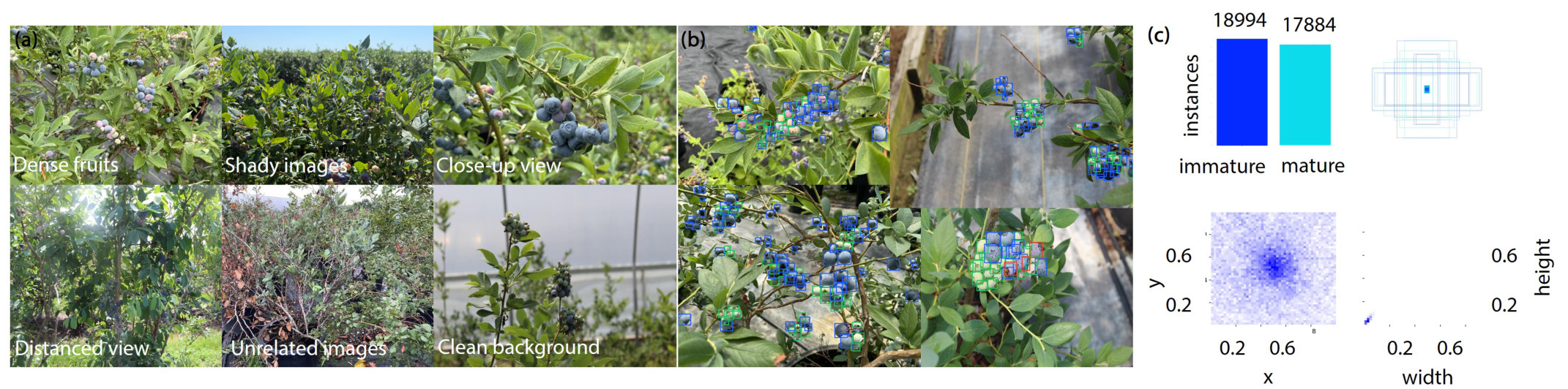
We release a 712-image instance-segmentation dataset collected over four growing seasons (2023–2026) at three research farms in Mississippi and Georgia, spanning four rabbiteye cultivars, five cameras and varying time of day. Berries are annotated individually, including partially occluded instances, as immature or mature. A COCO-pretrained YOLO26n fine-tuned at 1280 px reaches mAP50 = 0.767 on the held-out test split (41 berries per image on average) with only 3 % maturity misclassification.
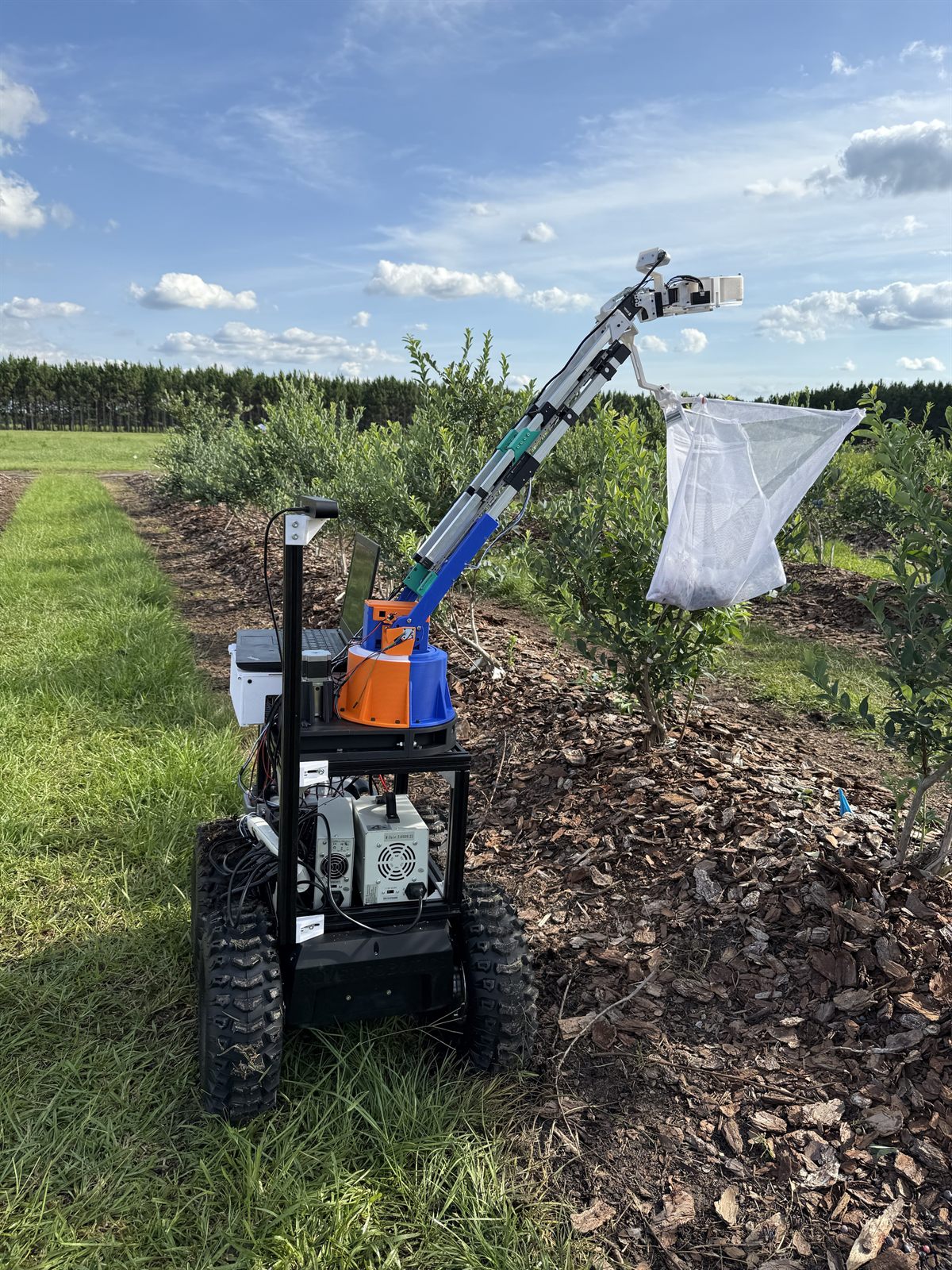
Field tests ran on Alapaha, Brightwell and Vernon cultivars with the arm mounted on a Rover Robotics MAX base, at several fixed locations through the day under natural illumination. Of 25 autonomous attempts, 23 clusters were grasped (92 %); both failures were approach errors, not gripper failures. With the gripper manually aligned, it picked 32 berries per minute against 55 for a human picker. Autonomously harvested fruit measured 15 % lower firmness than hand-picked fruit — an upper bound that includes a longer post-harvest interval, and one that compares favourably with the 16–26 % severe-bruising rates of over-the-row mechanical harvesters.